19/10/2026
English
日本語
Entertainment, Contents Agreement and International Business

NY and Atlanta Business Trip – New York Edition
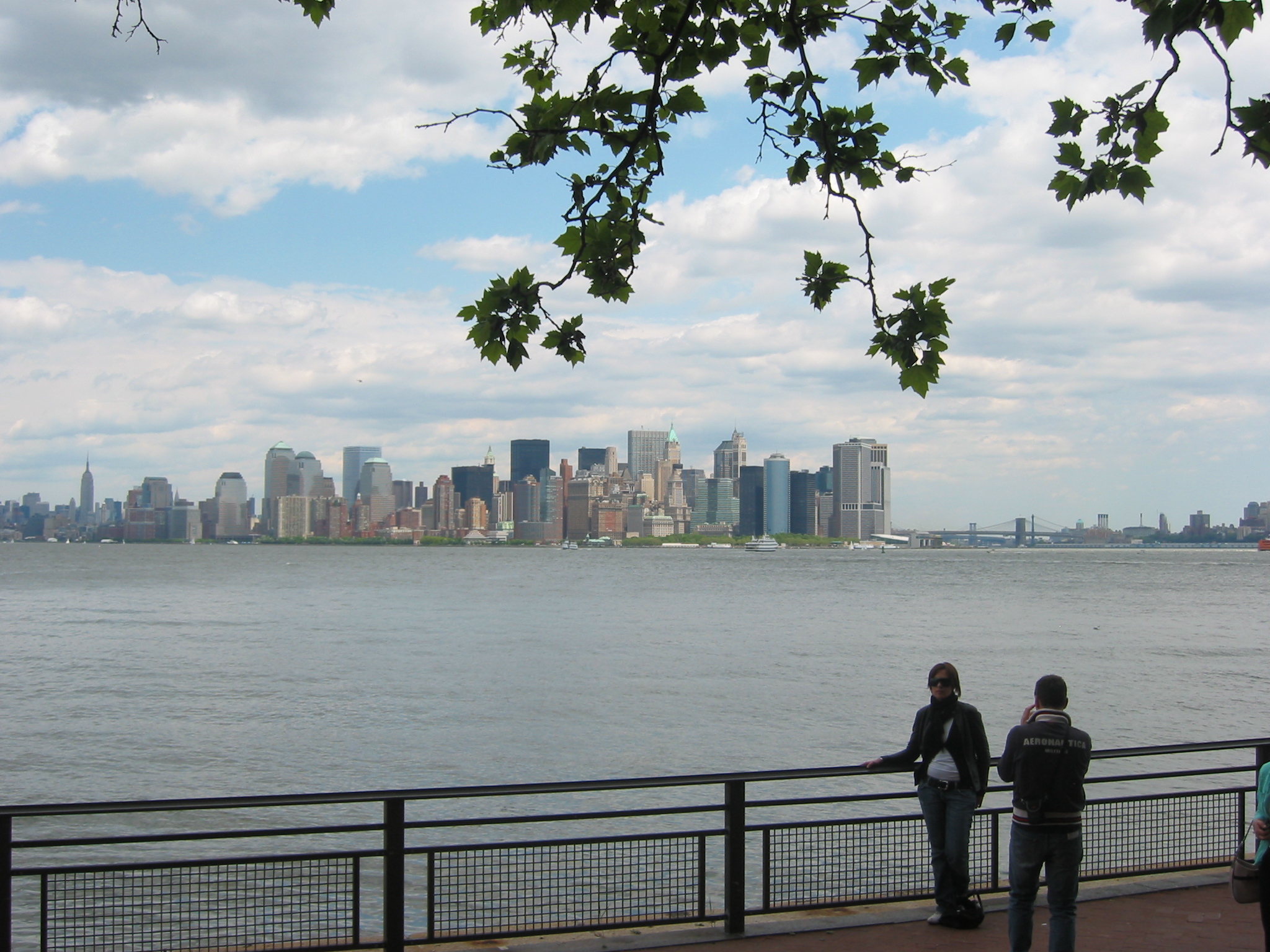
I recently had a number of things to take care of in New York and Atlanta, so I’d like to share a report on that trip.
1. The Metropolitan Opera
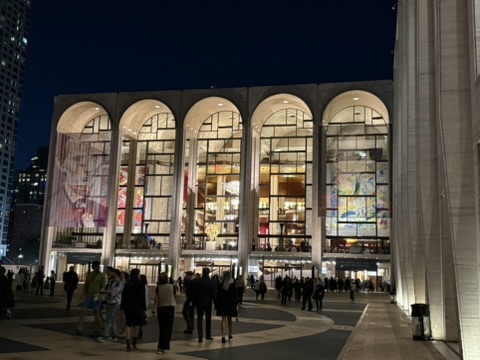
Since I was going to New York at this time of year, I absolutely wanted to see an opera. When I looked into it, I found that Puccini’s La Bohème was playing on October 3, so I decided to arrive in New York a day earlier than planned just to see it. I became a huge opera fan while living in New York, but I wasn’t exactly well-off back then, so I always took the $30 seats — the ones just in front of the standing room, on the third level, where it’s impossible to make out the performers’ faces. This time I splurged a little and bought a main-floor seat for the first time. Also, when it comes to opera, the classics are the way to go — the productions are magnificent and they’re simply more interesting to watch. Since I’d be sitting on the main floor, I wore a nice dress, and next to me were a young woman and an elderly woman; the younger one was also wearing a dress she probably wouldn’t normally wear, which was adorable. The story itself is the standard tragedy — the heroine dies at the end — but the lead’s singing was so superb that when she breathed her last, everyone around me, myself included, was blowing their noses and dabbing their eyes with handkerchiefs.
Watching a performance like this reminds me of a foreign national — last year, I believe — who entered the United States without a P-1 performance visa and then tried to hold a live concert. Everyone who performs in an opera or plays in the orchestra is an artist, and if they are foreign nationals, they need a visa. Normally, the “P” performance visa is for artists who actually have performances scheduled in the U.S., while the “O” artist visa is one you obtain by proving that you are truly outstanding as an artist. But when the event itself is different from the person’s own activities (say, a singer who is covering the event as a reporter), the P is difficult, and they would have to obtain an O to enter. Compared with the P, however, the O requires you to demonstrate your excellence in a variety of ways, so it’s hard to obtain unless you’re quite famous. The same is true of the P — performing doesn’t automatically mean you can get one — and there are many cases where someone performs but can’t get a visa, leaving ESTA entry as the only option (which is of course illegal). It’s a genuinely tricky area.
2. Contemporary Art — The Guggenheim and the Whitney
October 4 was a rainy, quite cold day in New York. I had plans to meet a friend, so I layered up and headed out. As I’ll mention later, the purpose of my New York visit was to meet an artist named Thomas Easley, so I also wanted to take in some contemporary art, and I decided to hop between two contemporary art museums: the Guggenheim and the Whitney.
The Guggenheim Museum
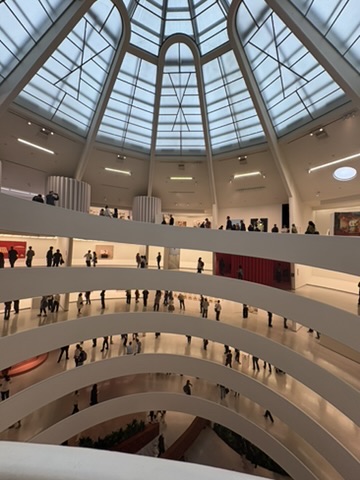
The Guggenheim is on the east side of Central Park — a museum you view by spiraling up and around its snail-shell building. Looking back, it was probably the least suitable museum for my friend, who is afraid of heights, and for me, whose sense of balance still hadn’t returned to normal. That spiraling may have been what made me feel ill after eating later, though I didn’t realize it at the time. Many of the works are quite avant-garde; this time, again, I couldn’t make sense of the exhibition, and the labels were far too small to read — which, in its own way, was oddly amusing.
The Whitney Museum
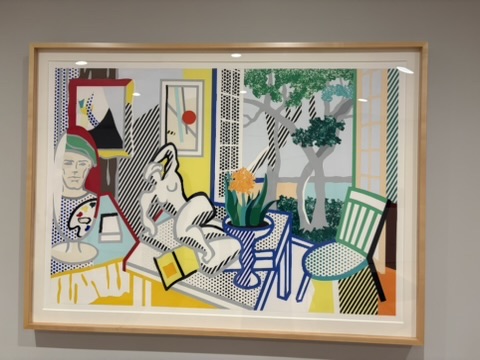
Leaving the Guggenheim, I took the subway and then a bus straight to the Whitney. It used to be on 75th Street, close to the apartment where I lived, so I went often — I love American Pop Art, and it always gave me energy. Now it has moved to a spot beside the pier at 14th Street, so visiting takes real determination. It was a shame that I was there just before the Roy Lichtenstein exhibition opened, but there were many works I love, including in the permanent collection, and it was quite interesting to see pieces ranging from drawings all the way to the finished paintings. That said, admission to each museum is $25 — about 4,000 yen. That’s far too expensive for a two-museum day.
The Whitney began when Gertrude Vanderbilt Whitney, herself a sculptor, bought works by contemporary American artists who had not yet gained recognition and supported them by giving them a place to exhibit. In an era when European art was what counted, that patronage was a major force in helping American art win recognition. In Japan, by contrast, exhibitions of world-famous painters are held frequently and draw large crowds, while contemporary art tends to be talked about mainly as an investment. I don’t think the culture of personally discovering artists you find interesting and cherishing their work has really taken root in Japan.
The Whitney is in the Meatpacking District — a rough area in the old days — but it’s now full of stylish shops, and I think walking this neighborhood and the Chelsea galleries gives you a real taste of New York’s art and culture. This time, hunger and rain had thoroughly worn me down, so after walking the High Line, I treated myself to margaritas and fajitas at a Mexican restaurant my friend had found for me.
3. To Pleasantville, to Meet an Attorney and an Artist
On October 5, I spent the daytime working in a conference room at Industrious Bryant Park, and then headed downtown to Brookfield Place, where a classmate of mine from Cardozo Law School works. It’s a huge shopping complex. For a downtown once dominated by finance, I think having a large complex with fashion stores and restaurants that families and tourists can also enjoy is a significant change. My friend is an Albanian about twelve years my junior and was as beautiful as ever; she said that back in the day she wanted to go out after work, but now all she wants is to go straight home — which made me laugh, because I feel exactly the same. I told her I’d show her around Tokyo if she ever came, and we had a light meal and parted.
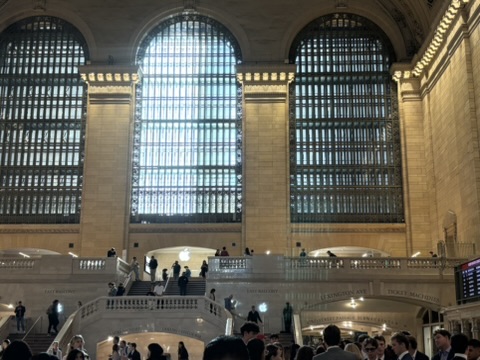
Then, on October 6, I headed to Pleasantville to fulfill the purpose of this trip: meeting Henry Goldstein, an entertainment attorney I’ve known for 25 years, along with his friend, the artist Thomas Easley, and Thomas’s wife Hema, who manages him. Pleasantville is a little beyond White Plains, about 50 minutes from Grand Central on the Harlem Line. It’s where Reader’s Digest was founded, has a history as a literary town, and thanks to its proximity to New York, many writers and editors live there. Its weekend farmers’ market is apparently popular in the area.
As for Thomas Easley: six years ago, during an online meeting with Henry about a different matter, I complimented a painting hanging behind him, and it turned out to be a Thomas Easley. Afterward, I agreed to help sell his work in Japan through an agency arrangement, but I hadn’t yet been able to make that happen. This spring, Thomas contacted me for the first time in about three years, saying he’d love to meet if I ever came to New York — which is why I decided to stop in New York on my way to Atlanta.
I told them about the current state of art sales in Japan and went over a list of international galleries and discussed art events. Hema suggested that to sell his work — he’s multi-talented, works in a wide range of styles, and can paint anything — it might be better to ask the people who already represent him in the U.S. to handle Japan as well. I also mentioned, as a point of reference, that Raoul Dufy is quite well known in Japan, though less so in the U.S. — probably because his painting style appeals to Japanese tastes. I personally love his work and own several prints of it.
Afterward, I spoke with Henry about the LA office matter and a personal request. I should be able to share more about that before long.
4. New York as a City
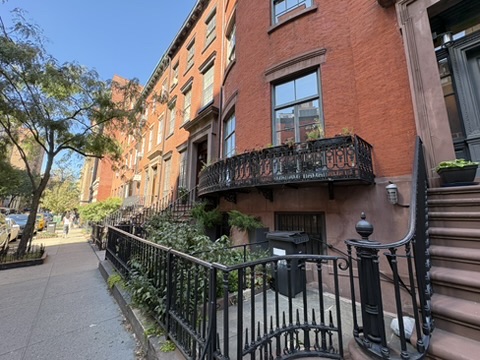
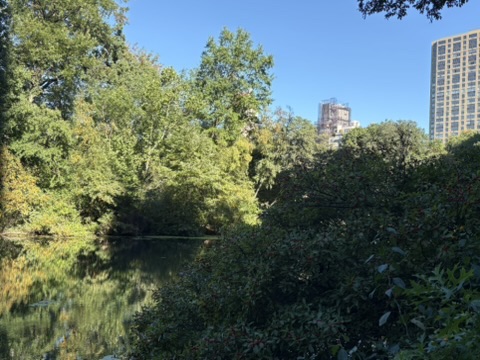
This was my first visit to New York in six years — my first since COVID-19. Maybe it has always been this way, or maybe I’ve simply gotten too used to LA, but the city itself offers no escape from noise, 24 hours a day, and my hotel room and Industrious (a serviced office) — even the conference rooms — were cramped, not particularly clean, and hard to settle into. Even on the subway, which is said to be safe, I felt tense because I was clearly dressed differently from the other passengers. I used to feel that being here inspired me to push harder, but this time I couldn’t wait to move on to Atlanta. One friend’s company decided to move her entire department to India; another friend’s bank is relocating its headquarters to Texas. Hearing these stories, I thought that New York’s sky-high prices and labor costs must have finally reached the limit for companies. Of course, on a different street you’ll find quiet, beautiful townhouses, and Central Park offers nature — but just imagining maintaining a life there is exhausting.
In my case, my law license is from California, so practicing in New York would come with constraints. California, on the other hand, has a large Japanese and Japanese-American community, plus many entertainment and IT companies — my areas of expertise — so there’s more breadth and possibility for my practice. Even if I had a New York license, I don’t think I would ever have considered opening my own law firm in New York. In hindsight, I’m glad I’m licensed in California. With my business done, I moved on to Atlanta the next day.
Profile
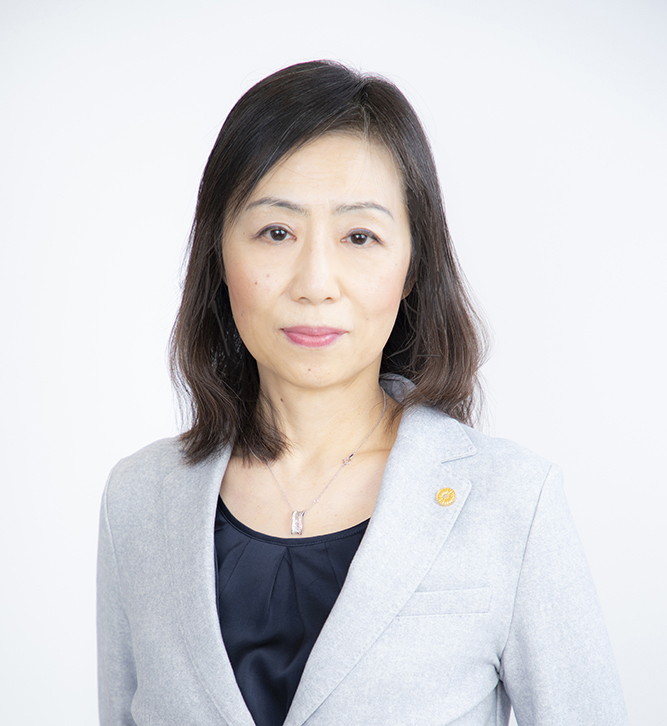 Ishibashi Legal Office
California Attorney
Representative
Junko Ishibashi
- Member- The State Bar of California
- Tokyo District Gyosei Shoshi Association- Member(Since 2007)
- Real Estate Transaction Manager, Business Copyright Upper License, Life Save Training Certification