19/10/2026
English
日本語
Entertainment, Contents Agreement and International Business

NY and Atlanta Business Trip – Atlanta Edition
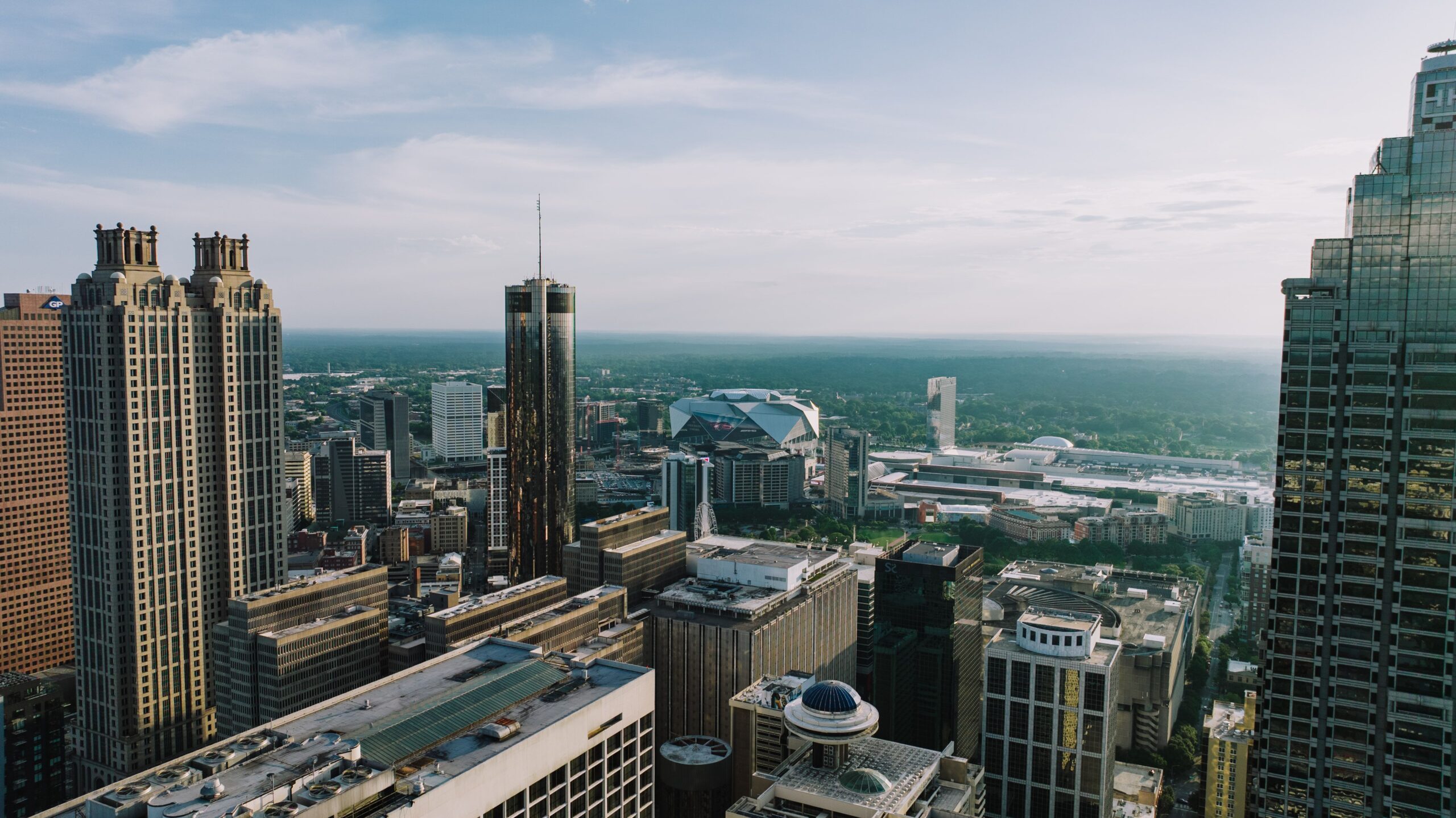
1. The Purpose of the Trip, and Atlanta’s Buckhead
As I mentioned briefly in the previous post, this was my first visit to Atlanta, and the reason was that this year’s annual conference hosted by the Forum on Entertainment and Sports Industries of the American Bar Association, of which I am a member, was held in Atlanta. It had previously been held in Las Vegas, which was convenient — close to LA. But when I looked into it, Atlanta has for years been called “South of Hollywood” for its many studios, and productions filmed there qualify for Georgia’s tax incentives: a 20% state income tax credit on qualified production spend (base investment) within the state, plus an extra 10% if the production includes promotion for the state. In practice, the standard method is to include the Georgia peach logo in the end credits, for a total of up to 30% — with no cap, and the credit is transferable. That’s why many Netflix dramas and films are shot in Atlanta, and in music, hip hop there is apparently as strong as or stronger than in NY or Chicago. A hip hop artist who once came to my office for a consultation, TRiiiPSS, is also from Atlanta.
The conference program even included optional offerings such as a talk by the General Counsel of Suno (an app for making music with AI) and a tour of the Tyler Perry Studios — and these options were open even to non-lawyer guests of registrants (the regular programs, too, were open to non-lawyers who paid the registration fee). The ABA is really going for it, I thought. I wanted so badly to go that I rearranged my packed schedule to make room for it.
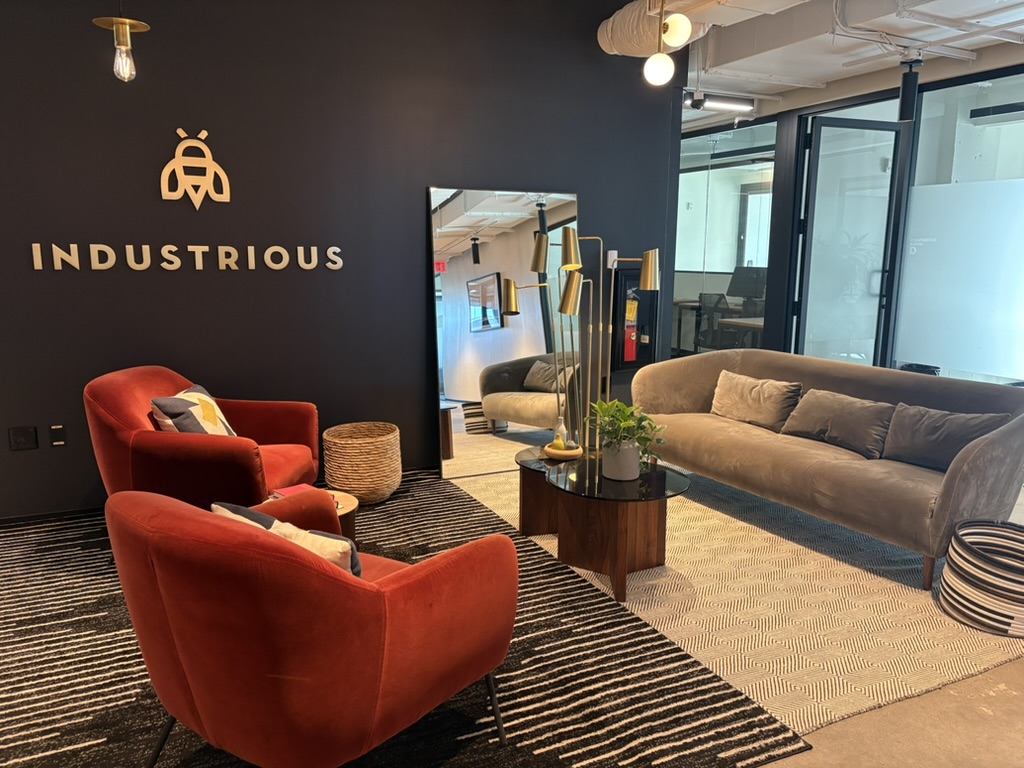
Atlanta itself is a big city, and safety is a mixed bag — I suppose it depends on the area — but the conference was held in Buckhead, a somewhat suburban residential area. During the day, elderly women were out walking on their own, and they would often smile at me as I passed, which reassured me that safety wasn’t going to be an issue.There was some time between my arrival and hotel check-in, so I strolled over to a nearby Industrious and worked in a meeting room. That one had plenty of space, and the office manager was considerate in all sorts of ways — very comfortable. A world of difference from the NY Industrious: cramped, with trash piling up, and the people there somehow standoffish.
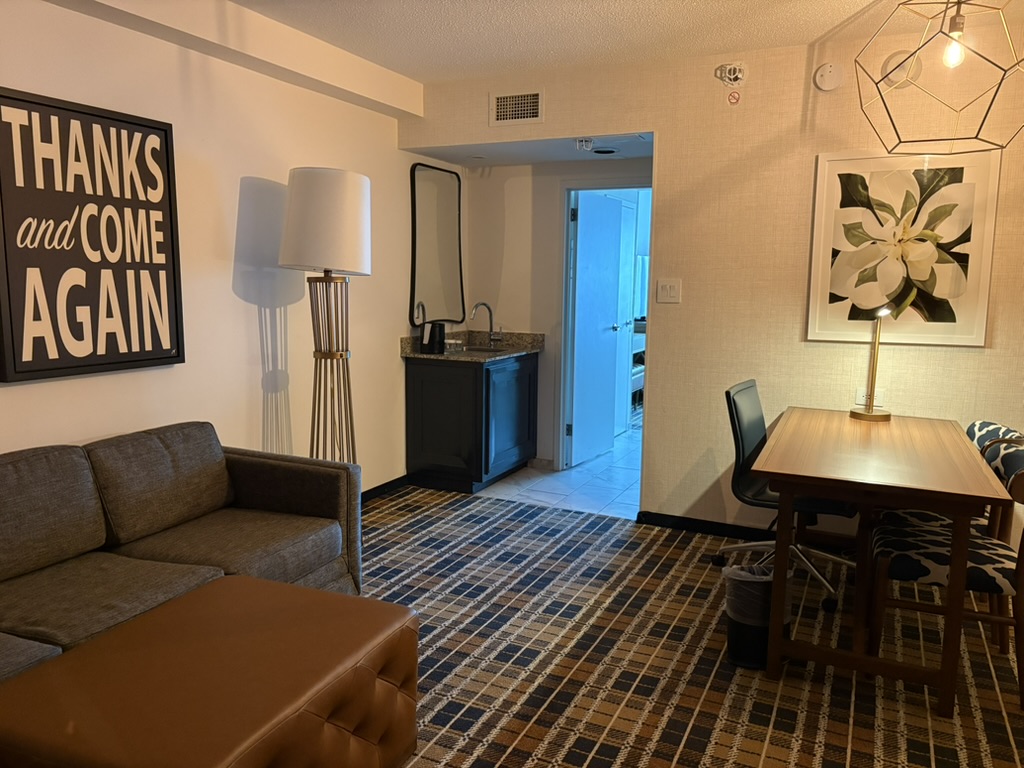
Back at the hotel, I checked in and found that my room had a separate living room, bathroom, and bedroom — bit bigger than my Tokyo apartment — with TVs in both the bedroom and the living room. Yet the rate was about half that of my NY hotel. The NY hotel was a Marriott Vacation Club and the Atlanta one an Embassy Suites by Hilton, so they were probably in roughly the similar rank. Breakfast was included, too. It was comfortable enough that I didn’t even need Industrious. Atlanta: five stars from day one.
2. October 8 — Conference Day One
The conference opened with a welcome reception on the evening of the 7th, but networking events are the bane of my existence and I had plenty to do, so I skipped the reception. The next morning there was a breakfast service billed as a networking event (can’t we just eat breakfast in peace?), but I had breakfast at the hotel before joining. As for the sessions themselves: since English isn’t my native language, I can’t be confident I caught everything in sessions where speakers just talk without presentation materials; jet lag and sleep deprivation kept me drowsy, and once my concentration slipped, English simply stopped going in through my ears. There are also copyright issues concerning each presenter’s materials, so I’ll keep my coverage to summaries.
Morning Session
The morning programs I chose were “Building Celebrity-Driven Brands” and “The AI Advantage: Transforming Investment & Valuation in Entertainment & Sports.” The first covered branding when celebrities tie up with products, image strategy, and the struggles of those who advise celebrities. Ideally, it’s a win-win relationship for both the brand and the celebrity, but if either side runs into trouble, managing the impact on the other side’s image and rebranding must be difficult. The second session introduced how each field within the entertainment industry is using AI. It came with a huge amount of material, hard to sum up in a word, but AI is probably used in more situations there than in other industries. The materials alone were fun to look through — a fascinating session.
A Speech by Suno’s General Counsel
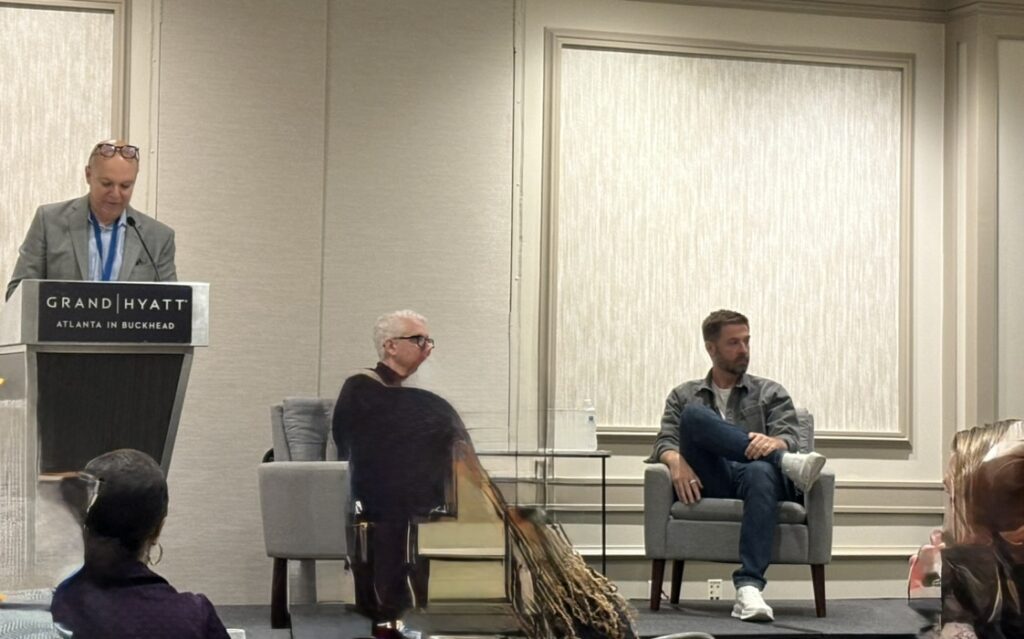
The next session, after wolfing down lunch in 30 minutes, was a conversation at the same venue between Suno’s General Counsel, Phil Castro, and journalist James Barber. What made me think “the ABA is really going for it” is that they would invite the general counsel of such a controversial company as a guest. Phil is an entrepreneur himself and apparently enjoys trying new things; despite presumably having lawsuits from record labels to deal with, he seemed remarkably matter-of-fact. The journalist asking the questions has spent many years in the music industry, and I wondered whether the very issues he raised were what Suno had set out to challenge.
Afternoon Session
In the afternoon I attended “Trends in Film Financing and Deal Making,” “Beyond the Stream: Inside the Modern Music Business,” and “Winning at What Cost? Ethics and Professionalism Lessons from Hit TV Shows: ‘Suits.'” Of the four panelists in the first session, three were Atlanta residents. They covered which states offer production incentives and how financing works in Atlanta — really interesting. I had a chance to talk with one of the panelists, Randie, at the next day’s reception: the entertainment division of her employer, City National Bank, has over 200 people and serves clients in film production. As mentioned above, filming in Georgia comes with tax incentives (there are other requirements, of course), and CNB apparently lends actively to film production companies in both LA and Atlanta — it sounds like an opportunity worth taking advantage of.
The second session was a discussion on monetizing music through streaming. There were no materials at all; I took notes, but it was my fifth session of the day and my concentration had probably all but run out, so I can’t recall it well. Claude helped me out, and apparently it was “a panel that organized the streaming-era music business as the flow of money and rights, from the perspectives of distribution, publishing, finance, and catalog investment. Practical issues were central: the MLC’s operations, contractual points in royalty-secured lending and catalog securitization, risk-sharing with DSPs, and AI-driven fake streams and metadata problems.” I took photos of some of the materials, so I need to digest them properly later. Almost no foreign attendees, but still, I wish they had uploaded at least one set of materials.
The third session used scenes from the TV show Suits and had everyone consider which professional-conduct rules they violated. Suits is one of my favorite shows, and I appreciated how cleverly they livened up ethics sessions, which tend to be boring. Six sessions in one day; there was an Assembly Studios tour afterward, but I skipped it. This year almost everyone else was domestic; the only foreign participant besides me may have been a Chinese woman from Nashville, Tennessee, who sat next to me and chatted. To keep up with Americans who can talk energetically from morning to night and attend all the sessions, all you can do is train your body and eat well. That said, my dinner was ready-to-heat curry and Sato no Gohan packaged rice that I’d brought from Japan.
3. October 9 — Conference Day Two
Morning Session
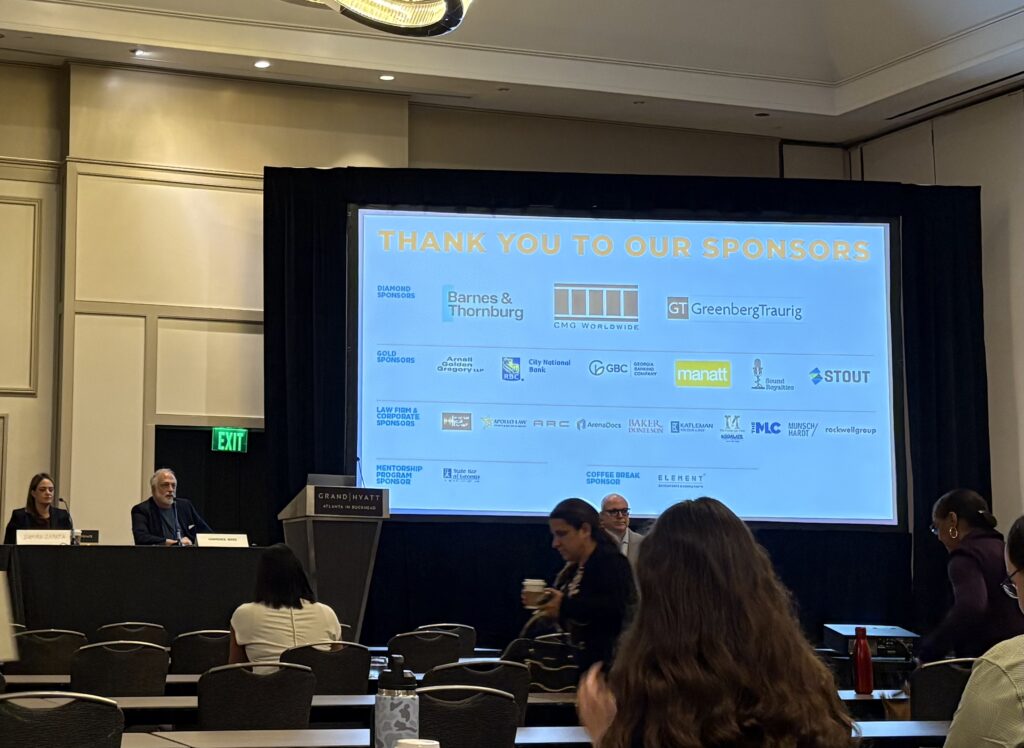
On day two, I skipped the breakfast-plus-networking event as planned and took “Hot Topics & Emerging Issues in Art, Design and Museum Law” and “Trial by Algorithm: Litigation and Reputation in the Information Era.” I picked the first because of the Thomas Easley connection, but it turned to Confederate monument removal and free speech — not quite what I had wanted to hear. I regretted not taking the “Litigation Update” next door instead, but then reminded myself that the “Litigation Update” materials were available, so I could read them later. The title “Trial by Algorithm” carried quite a bit of nuance: a panel on the reality that the jury has become the algorithm — in entertainment-industry litigation, the “verdict” is delivered on social media before any judgment comes down. With public opinion manipulated by generative AI, bots, and organized campaigns, they discussed how to tell genuine reactions from artificial ones, how to protect privilege when working with PR firms, and the legal and ethical risks when a firestorm erupts. Really interesting.
Afternoon Session
In the afternoon I took “Audit in the Era of Digital Streaming” and “At the Bargaining Table: The New Rules of Labor in Entertainment.” In the first, one of the speakers was a forensic accountant at a company that audits whether license fees are properly paid on digital streaming. I learned that this, too, is forensic accountants’ work. I had assumed that with the right systems it could be calculated automatically, but in reality there are input-data errors, contract-interpretation issues, the structural problem of payments layered across multiple tiers, the question of whether money is being paid that never appears on statements, and problems unique to video streaming. Given that payees get almost no chance to see inside the numbers, there does seem to be a genuine need for rigorous audits.
The second was on labor issues in the entertainment industry, with the participation of SAG-AFTRA’s General Counsel. It touched on the impact of AI and the outlook going forward. I also got a look at SAG-AFTRA’s resources, which relate directly to performance visas, artist visas, and contracts with artists, so I listened with great interest.
The Tyler Perry Studios Tour
The final program was a tour of Tyler Perry Studios. Tyler Perry, famous for the Madea series in which he plays the auntie Madea in drag, among many other film and television hits, is the one and only — and a remarkable — African American in the U.S. who owns his own studio. The studio is a 330-acre former military base he purchased from the city in 2015 and converted — reportedly about 29 Tokyo Domes in area. Each of the 12 soundstages is named after a famous Black actor. The Netflix series “Beauty in Black” is of course shot here too. I wanted to see the cheap-looking motel that appears in the show, but when I asked the guide (actually a young woman fresh out of college who had been selected for the studio’s internship program), she told me we had just passed it. Too bad — apparently when you open the doors, it’s a proper set of rooms.
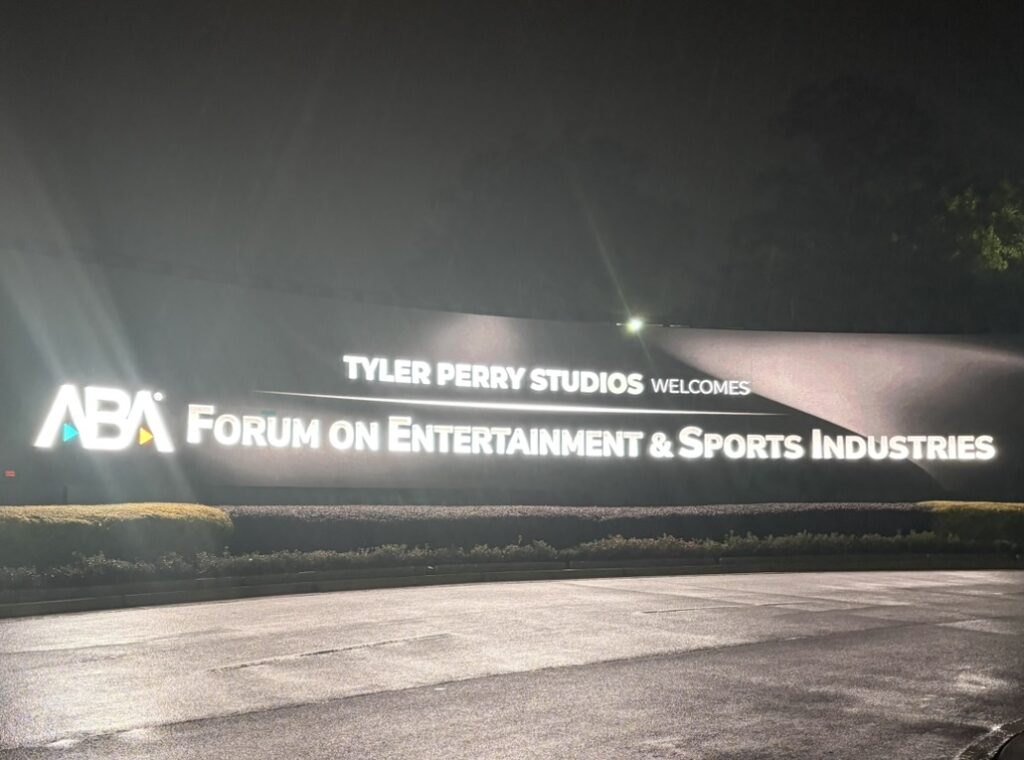
Also, because the site was a military base purchased by a private individual, confidentiality restrictions meant that photography and filming were permitted only in approved areas, and posting on social media was prohibited. Apparently some people still live there. Tyler Perry apparently likes to shoot everything here; there’s a mock airport terminal and even a fake White House — great fun. According to people who had gone on the Assembly Studios tour the day before, while that one has more state-of-the-art facilities, Tyler Perry’s is “old style.” Atlanta has many more studios besides this one, with all sorts of productions shooting there. With space so vast, large-scale location shoots are surely possible in Atlanta.
Back at the hotel after the studio tour, there was the reception. I really didn’t want to go — it would mean more small talk with strangers — but I was hungry, and the hosts, veteran entertainment lawyers, kindly noticed I had come alone and introduced me to other attendees, and the conversation unexpectedly flowed, so I’m glad I went. In fact, back in 2011 I attended the ABA Annual Meeting, held in Chicago, as a Foreign Associate; experiencing that open, everyone-is-welcome atmosphere is what made me resolve, “I really do want to become a lawyer and join these people” — and I started planning my approach to the bar exam. I also got to meet one of the hosts, music lawyer Janine Small, who casually mentioned things like “my office near Union Square has its own music studio.”
4. Final Day and Wrap-Up
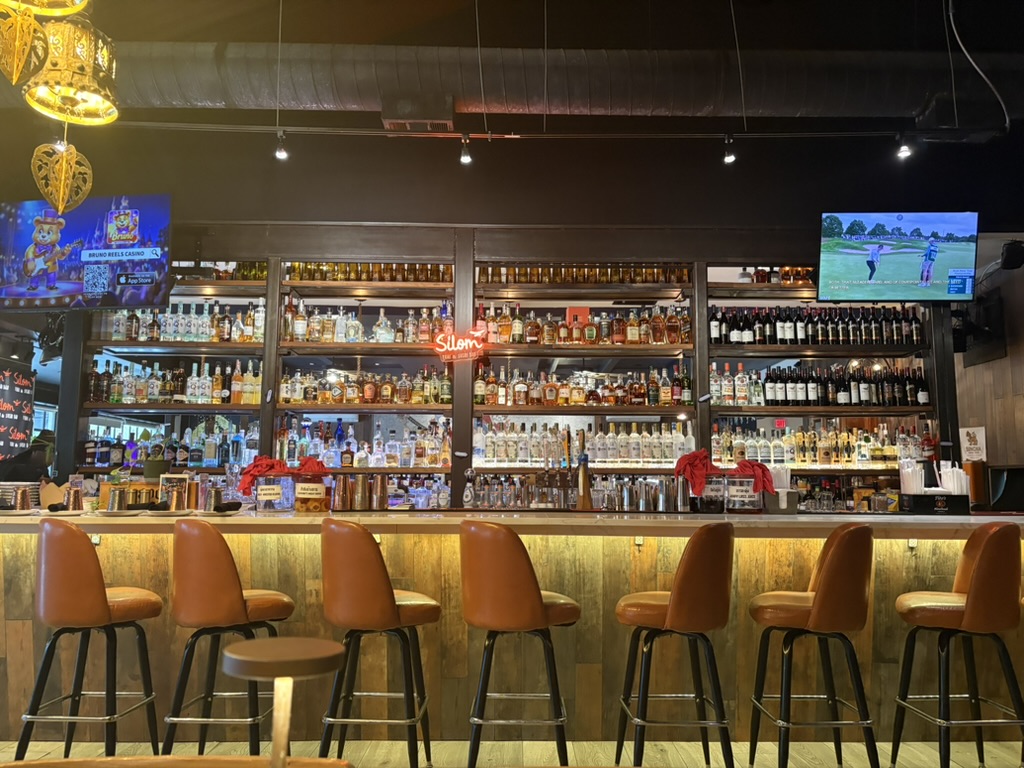
After the Forum ended, I had deliberately booked my flight home for the day after next so I could sightsee in Atlanta. But because of a hurricane passing through the South, the wind and rain picked up violently from the night of the 9th, and it became clear there would be no going outside the next day. I had planned to wander Midtown’s Beltline Bridge and Ponce City Market, visit the Trap Music Museum — conceived by Atlanta-born rapper T.I. and his creative team, with diverse exhibits as an art gallery — and enjoy wine and hip hop at City Winery Atlanta in the evening, but I gave all that up and settled into work in my room. But by afternoon the rain had lightened and the wind had largely died down, so I resolved to go out (well, “resolved” is a stretch). It was past two and I was hungry, so I went to Silom Thai & Sushi Bar and stuffed myself with Thai food, then strolled and shopped at Lenox Square, the shopping area nearby, and returned to the hotel in the early evening. I couldn’t sightsee, but I got work, food, and shopping done, and I didn’t have to worry about the hurricane delaying my flight, so all in all, fine.
Looking back on this New York and Atlanta business trip: in New York, reunions with old friends and new encounters; in Atlanta, learning that the city itself is thriving on the entertainment industry and has room to keep growing along with streaming and other businesses (after all, there is still plenty of land to spare); and the chance to learn about the legal challenges and direction of AI and streaming. Pushing myself to go was worth it. My Atlanta sightseeing plans “Went With The Wind”, but I came home with plenty of valuable takeaways. This time, the jet lag was rough right to the end — strange, because I hardly ever get jet lag on the West Coast. Next time I travel to the East Coast, I’ll go via the West Coast and give my body clock time to adjust first.
Profile
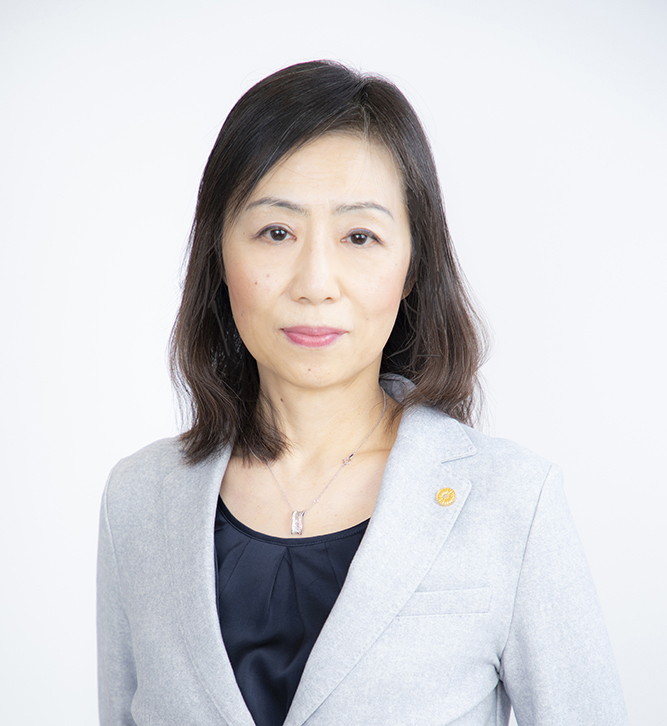 Ishibashi Legal Office
California Attorney
Representative
Junko Ishibashi
- Member- The State Bar of California
- Tokyo District Gyosei Shoshi Association- Member(Since 2007)
- Real Estate Transaction Manager, Business Copyright Upper License, Life Save Training Certification