19/10/2026
English
日本語
Entertainment, Contents Agreement and International Business

University Sports and Fairness
Every year, when the Hakone Ekiden season comes around, the TV coverage inevitably focuses on the dominance of international student runners, especially those from Africa. The dramatic surges in leg two, where they pass dozens of runners in one go, certainly make for simple, eye‑catching television. The only reason we get to watch the race for free, after all, is because those moments draw such a big audience.
But to be honest, I almost never find that spectacle “entertaining.”
The reason is simple: when I look at the Hakone Ekiden as a university sport, that overwhelming dominance makes it harder to see the stories and sense of inevitability that are supposed to be there.
I myself graduated from Waseda University, School of Political Science and Economics and later from Chuo University’s Faculty of Law. When I chose my universities, what mattered to me was not “where I could get in” but “where I actually wanted to be” (though of course there were schools that were beyond my academic reach). I passed both Waseda and Keio on my first round of entrance exams, but I wanted to support rugby and baseball as a student, and Waseda was the university I felt most drawn to. So I chose Waseda without hesitation.
Years later, when I decided to enroll in a correspondence law program, I again found myself choosing between Chuo and Keio. Keio required a health check just to become a jukusei (full Keio student), and I remember thinking, “What are they talking about?” So instead of going to Keio—where I had once been admitted but chosen not to attend—I opted for Chuo University, which has a long tradition in correspondence legal education, even though commuting there in the summer to earn credits meant a total of three hours of travel each day. That choice led me to wonderful professors and friends I would never have met otherwise.
None of these decisions were about “hensachi(university measures in Japan)” rankings or brand power. My standard was whether I could accept the atmosphere and values of the university, and whether studying there would still make sense to me years later when I looked back.
There are moments when I watch the Hakone Ekiden and feel a sense of discomfort.
I find myself wondering, “Are the students who chose this university because they wanted to run the Ekiden actually the ones in the spotlight?”
I don’t mean this as a criticism of the international runners themselves. Their effort, talent, and seriousness toward the sport are all things we should, of course, respect. What troubles me is the structure in which winning is prioritized so heavily that the meaning of competing for a particular university—and the question of why it has to be that university—seems to fade into the background.
When I think about this, I always come back to the tradition of the Waseda University rugby team, especially under the influence of Tetsunosuke Onishi, who placed great emphasis on Jishuren—self‑directed training. Waseda rugby does not recruit foreign players on special recommendations purely for the sake of winning. Many players join because they are willing to浪人—spend an extra year studying—just to be able to play for Waseda, and those students are the ones who actually take the field. That fact alone suggests that, before any system or strengthening program, it is the culture and values of the team and the university that draw people in. Even without foreign players, Waseda has continued to be one of the flagship programs of Japanese university rugby.

Of course, not every university competes under the same conditions. Name recognition, history, location, training environment—each school has its own circumstances, and I understand that many programs have to be creative to find ways to win. I have no intention of dismissing that effort itself. The Hakone Ekiden draws some of the highest TV ratings of the New Year in Japan; if a little‑known university performs well, its name suddenly becomes known nationwide. Even if a school pays the tuition of international students, the publicity value can be enormous.
Still, as long as we call it “university sport,” we can’t completely avoid the questions: who is this competition really for, and what do we consider success?
In this year’s Hakone Ekiden, too, a foreign exchange student ran at the front in the second leg. Whatever the final standings may be, that kind of development simply doesn’t move me very much. What interests me more than short‑term victories or buzz is the culture a university has built over many years, and the power it has to make young people think, “I want to study and compete there.” How do we protect that value, and how do we pass it on to the next generation?
Watching the Hakone Ekiden, I found myself thinking about these questions, about the stance of Waseda rugby, and about my own university choices—now something of a distant memory.
Profile
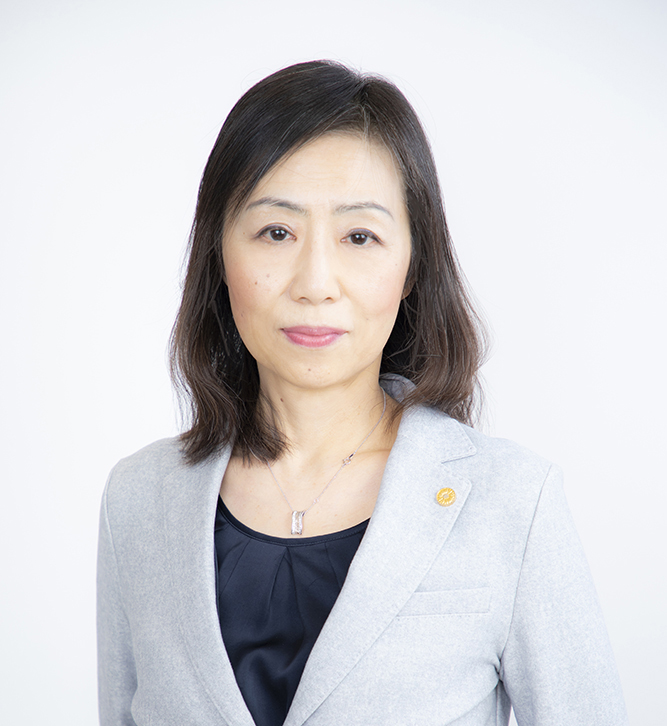 Ishibashi Legal Office
California Attorney
Representative
Junko Ishibashi
- Member- The State Bar of California
- Tokyo District Gyosei Shoshi Association- Member(Since 2007)
- Real Estate Transaction Manager, Business Copyright Upper License, Life Save Training Certification